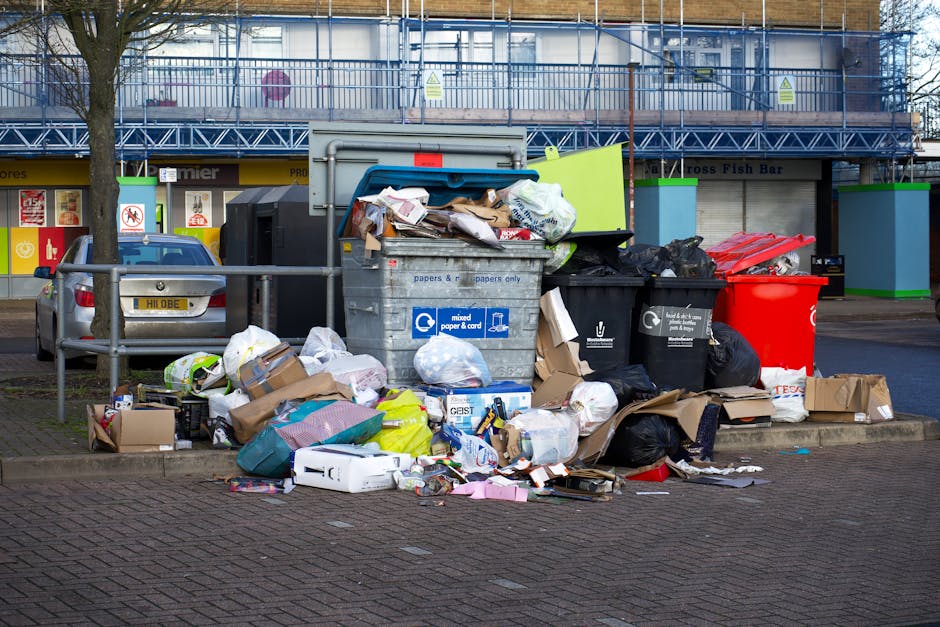
Insider tips to avoid hidden rubbish removal charges in Reigate

If you have ever been quoted a tidy-looking price for rubbish removal in Reigate, only to see it creep up once the team arrives, you are not alone. Hidden charges usually appear in the small print, or in the gaps between what you assumed and what the provider actually priced. The good news is that most of them are avoidable if you know what to ask, what to photograph, and what to confirm before anyone loads the van. In this guide, we'll walk through Insider tips to avoid hidden rubbish removal charges in Reigate in plain English, so you can book with confidence and keep the final bill where it should be.
Whether you are clearing a loft, emptying a garage, moving bulky furniture, or sorting builders' rubble after a renovation, a little preparation goes a long way. Truth be told, the cheapest quote is not always the cheapest job.
- Why hidden rubbish removal charges matter
- How rubbish removal pricing usually works
- Key benefits of getting pricing right
- Who this advice is for
- Step-by-step guidance
- Expert tips for better results
- Common mistakes to avoid
- Tools, resources and recommendations
- Law, compliance and best practice
- Options and comparison table
- Case study or real-world example
- Practical checklist
- Conclusion
- Frequently asked questions
Why Insider tips to avoid hidden rubbish removal charges in Reigate Matters
Rubbish removal can look straightforward from the outside: you point at the waste, the team clears it, everyone goes home happy. But pricing often depends on volume, weight, access, waste type, labour time, and disposal costs. If any one of those factors changes on the day, a quote can shift. Sometimes fairly. Sometimes not so fairly.
In Reigate, where properties range from compact flats to larger family homes and older buildings with tighter access, those variables can be especially relevant. A narrow staircase, a long carry from the kerb, or a load of mixed waste can all affect the cost. That does not mean you should expect surprises. It means you should expect detail.
Hidden rubbish removal charges matter because they affect three things at once:
- your budget - the difference between a planned spend and an annoying overrun;
- your timing - awkward disputes can slow the job down;
- your trust - nobody enjoys feeling nudged into paying more after the fact.
A clear price is not just about saving money. It is about reducing stress. And let's face it, when the hallway is full of old furniture and a fridge is leaning against the wall, stress is already part of the picture.
If you want a broader view of what a reputable provider should be able to explain before the job starts, it is worth reading the site's pricing and quotes guidance alongside the service details for waste removal.
How Insider tips to avoid hidden rubbish removal charges in Reigate Works
The basic idea is simple: remove ambiguity before collection day. Most hidden charges happen because one side is thinking about the waste in one way, and the other side is pricing it in another.
For example, you may describe a "small pile" of rubbish, but the crew might arrive to find several bulky items, a mattress, broken shelving, and a few heavy bags tucked behind a gate. Or you may assume access is easy, while the team discovers they need to carry items downstairs, through a rear alley, and around parked vehicles. These are real-life details that affect labour and disposal costs.
Usually, a transparent rubbish removal process follows this pattern:
- You describe the waste as accurately as possible.
- You share photos, dimensions, or a rough inventory.
- The provider gives a quote based on expected volume, type, and access.
- Any exceptions are explained upfront, not after loading begins.
- The final price matches the agreed scope, unless the job changes materially.
This is where strong communication does the heavy lifting. It sounds obvious, but a lot of pricing disputes come from fuzzy descriptions. "Just a few bits" is a classic. So is "It's only in the garage" when the garage turns out to be packed wall to wall.
If you are comparing services for different household jobs, some pages on the site can help you understand how scope varies. For instance, house clearance, flat clearance, and garage clearance all involve different access and waste profiles.
Key Benefits and Practical Advantages
Avoiding hidden charges is not just about avoiding a bad surprise on the invoice. There are some very practical benefits too.
- Better budgeting: you can plan accurately for a home clear-out, office purge, or building project.
- Less friction on the day: everyone knows what is included before the lorry turns up.
- Faster completion: fewer questions, fewer delays, fewer awkward recalculations with a clipboard in hand.
- Better value: a clear quote lets you compare like for like, not apples and pears.
- More control over disposal: you can separate standard waste from specialist items that may need special handling.
There is also a hidden benefit that people miss: better quotes often reveal better service quality. If a company is clear about access, load size, item type, and payment terms, it usually means they run an organised operation. That tends to show up elsewhere too, such as how they handle insurance and safety or their payment and security standards.
In our experience, the customers who prepare well are not just happier with the price. They are happier with the whole day. The van arrives, the crew works, the job gets done. Nice and calm. Almost boring, which is exactly what you want from waste removal.
Who This Is For and When It Makes Sense
This advice is for anyone in Reigate who needs rubbish removed and does not want the bill to drift upward halfway through the job. That includes homeowners, landlords, tenants, tradespeople, office managers, and anyone doing a clear-out before a move, sale, or refurbishment.
It is especially useful if you are dealing with:
- mixed household junk that includes bulky items;
- builder's waste after DIY or renovation work;
- furniture that needs dismantling or two-person lifting;
- garden waste mixed with soil, branches, or planters;
- appliances like fridges, freezers, washing machines, or ovens;
- items that might be classed as hazardous or awkward to dispose of.
It also makes sense if you are balancing convenience against cost. Sometimes paying for a full clearance is the right call. Sometimes a smaller, more targeted collection makes more sense. If you are clearing a packed office or a home full of mixed items, the service pages for office clearance and home clearance can help you judge the right fit.
Ask yourself one simple question: do I want the cheapest quote, or the clearest quote? There is a difference, and it matters.
Step-by-Step Guidance
If you want to avoid hidden rubbish removal charges in Reigate, use a methodical approach. Not glamorous, maybe, but very effective.
1. Make a proper waste list
Walk through the area and list everything that needs to go. Include bulky items, bagged waste, loose rubble, appliances, and anything odd-sized. If there are items tucked behind other things, check those too. The back corner of a garage can be full of surprises. Usually not the fun kind.
2. Take clear photos in good light
Photographs reduce guesswork. Take wide shots and close-ups from a few angles. If the clearance area is dim or cluttered, use daylight or turn the lights on. A photo taken at 7am with a shadow across half the room does not help anyone much.
3. Be honest about access
Access is one of the biggest drivers of final cost. Mention stairs, long driveways, narrow lanes, low ceilings, locked gates, parking restrictions, and any awkward carrying distance. If a team has to walk a long way from the property to the vehicle, that is real labour, not a tiny detail.
4. Ask what the quote includes
Before accepting a price, ask whether it covers labour, disposal, mileage, congestion or parking issues, VAT if applicable, and any minimum load fee. Ask if there are extra charges for dismantling furniture or moving waste from upstairs or outbuildings.
5. Clarify excluded items
Some materials can trigger additional handling requirements. That might include fridges, freezers, mattresses, chemicals, paints, or other specialist items. If you have anything unusual, mention it early. The same goes for potentially difficult waste from building work. A page like builders waste clearance is useful when your load includes rubble, plasterboard, timber, or mixed renovation debris.
6. Confirm how final price changes are handled
If the crew finds more waste than expected, what happens? Do they pause and re-quote? Do they charge by volume on the spot? Is there a clear threshold for changes? You want the answer before collection day, not while someone is standing in your hallway with a pen behind their ear.
7. Keep the agreement in writing
A written quote or booking confirmation is your best protection. It does not need to be complicated. The key is that the scope, price basis, and any exceptions are documented in plain language.
8. Check payment timing
Find out whether payment is due before the job, after the job, or at the point of collection. Also check whether card payments are accepted and whether any fees apply. Clear payment terms are part of a clear service.
Expert Tips for Better Results
Here are the little things that make a surprisingly big difference.
- Use measurements, not guesses. Saying "about two cubic metres" is far better than saying "a van full" because van sizes vary.
- Separate waste types where possible. Mixed loads can be pricier to process than separated material.
- Ask about reuse and recycling routes. A provider with a clear sustainability policy may handle items more efficiently. See recycling and sustainability for the sort of standards to look for.
- Take a quick inventory of value-sensitive items. If there are reusable pieces, you may prefer a different route than simple disposal.
- Schedule collection for a time when access is easiest. School-run traffic, parking pressure, or rainy conditions can make an otherwise simple job more fiddly.
- Photograph awkward items separately. A mattress, sofa, or appliance can carry special handling or disposal considerations. The pages for mattress and sofa disposal and fridge and appliance removal are useful if those items are part of the load.
One quiet but important tip: don't wait until the morning of collection to discover the waste is in three different places. That is how pricing becomes a moving target. And nobody likes a moving target.
If you are dealing with delicate or private materials during a clear-out, the site's confidential shredding information may also be worth a look before documents are thrown into general waste.
Common Mistakes to Avoid
Most hidden charges can be traced back to a few predictable mistakes. Here are the ones that trip people up most often.
- Under-describing the waste: "A few bags" becomes a mixed load, and the quote changes.
- Ignoring access issues: stairs, parking, and carrying distance matter more than people think.
- Not asking about extras: dismantling, heavy lifting, or specialist item fees can be missed.
- Assuming everything counts the same: a mattress, a fridge, and a pile of garden cuttings do not always sit in the same pricing bucket.
- Comparing only the headline number: the cheapest quote can be the most expensive once additions appear.
- Forgetting to mention awkward timing: if the job must happen around roadworks, tenants, or a building schedule, tell the provider early.
One especially common issue is mixing clean waste with awkward waste. For example, a garage clear-out may contain old boxes, rusted metal, a broken chair, and a leaking tin of paint. That tiny paint tin can change the whole conversation. If you are not sure whether something is classed as hazardous, it is better to ask before booking. The hazardous waste disposal page is a sensible starting point.
A bit of honesty goes a long way here. Providers are usually much happier to quote accurately than to play detective on the day.
Tools, Resources and Recommendations
You do not need fancy software to avoid hidden charges. A phone, a notepad, and a camera are usually enough. Still, a few simple tools help.
- Your smartphone camera: take photos of each room, pile, or item group.
- A measuring tape: useful for bulky furniture, loft clutter, and awkward spaces.
- A basic checklist: make sure you cover waste type, access, floor level, and special items.
- Email or booking form: useful for keeping the quote in writing.
- Online service pages: compare what is included in the exact service you need, such as furniture clearance or garden clearance.
If you are the sort of person who likes to compare approaches before committing, the page on what can go in a skip is also handy. Even if you are not booking a skip, it helps you understand what types of waste are straightforward and what types may need extra attention.
And if you are dealing with business premises rather than a home, business waste removal gives a better sense of how commercial clearances are typically structured.
Law, Compliance, Standards, or Best Practice
We should be careful here: pricing practices can vary, and legal duties depend on the waste type and the circumstances. That said, there are some good UK best-practice points worth keeping in mind.
First, waste should be handled and disposed of responsibly. If you are passing waste to a collection company, it is sensible to choose a provider that explains how it manages disposal, sorting, and safety. That includes checking what happens with reusable, recyclable, and specialist waste streams.
Second, if the job involves potentially hazardous materials, electrical appliances, or items that may need special handling, make sure those are identified before collection. The wrong assumption can lead to delays or extra charges, but it can also create safety problems. Nobody wants that.
Third, the provider should be able to explain how it approaches insurance, site safety, and staff protection, especially where lifting, access, or heavy items are involved. A responsible operator will not brush this off. You can review the site's statements on health and safety policy and insurance and safety for the general standard to expect.
For privacy and user trust, clear terms matter too. Before booking, it is worth skimming terms and conditions and the privacy policy. That does not just protect the business; it protects you from vague surprises.
Best practice, in plain language, is simple: ask early, confirm in writing, and don't leave scope to chance.
Options, Methods, or Comparison Table
There are a few common ways people handle unwanted rubbish in Reigate, and each has a different risk profile for hidden charges.
| Option | Best for | Potential hidden cost risk | What to check before booking |
|---|---|---|---|
| Man and van rubbish removal | Mixed household waste, bulky items, quick clearances | Access fees, minimum load fees, special item charges | Photos, item list, parking, labour assumptions |
| Skip hire | Longer projects, DIY, repeated loading over time | Permit needs, overfilling, prohibited items | What can go in the skip, permit arrangements, size |
| Full clearance service | Homes, offices, garages, lofts, or larger jobs | Scope creep if rooms or items are added late | What areas are included, labour, dismantling, exclusions |
| Self-loading and tip run | Small amounts of manageable waste | Fuel, time, vehicle wear, disposal restrictions | Facility rules, sorting, load security, time cost |
For many people, a professional collection is the easiest route because it bundles labour and disposal together. But the more mixed or awkward the waste, the more important it becomes to price accurately. If your job is mostly furniture, for instance, the pages on furniture disposal and furniture clearance may help you decide whether a targeted service is enough.
Case Study or Real-World Example
Picture a typical Reigate Saturday morning. A homeowner is clearing a semi-detached house before decorating. There are old chairs in the dining room, boxes in the loft, a broken washing machine in the kitchen, and a half-empty shed full of odds and ends. The first instinct is to say, "It's probably one van load."
But after a quick walk-through, the actual picture is clearer. The loft access is awkward. The washing machine needs a two-person lift. The shed contains a few heavy bits that were not counted at first. Without that detail, the initial quote would almost certainly have been off.
So the homeowner takes five photos, measures the larger furniture, and sends a short description of the access route. The provider responds with a more precise price, explaining what is covered and what would count as an extra if discovered later. No drama. No mystery invoice. Just a proper booking.
That is what avoiding hidden charges looks like in the real world. Not heroic. Just organised.
Another common version of this scenario involves landlords or letting agents managing a flat clearance between tenants. In those cases, the difference between a tidy quote and a surprise fee often comes down to whether storage cupboards, loft spaces, or external areas are included in the scope. If that sounds familiar, flat clearance is worth reviewing before booking anything.
Practical Checklist
Use this checklist before you confirm a rubbish removal booking in Reigate.
- Have I listed every item or waste pile that needs removing?
- Have I included photos from more than one angle?
- Have I described stairs, parking, gates, or long carry distances?
- Have I mentioned bulky, heavy, or awkward items?
- Have I checked whether any items need special disposal handling?
- Have I asked what the quote includes and excludes?
- Have I confirmed whether the price is fixed or may change on the day?
- Have I asked about payment timing and accepted payment methods?
- Have I got the quote or booking confirmation in writing?
- Have I compared the service with the right page for the job, such as loft clearance or garage clearance?
If you can tick most of those boxes, you are already well ahead of the typical last-minute booking. And that saves money, yes, but it also saves the kind of hassle that lingers all afternoon.
Get a free quote today and see how much you can save.
Conclusion
The best way to avoid hidden rubbish removal charges in Reigate is to treat the quote like a conversation, not a guess. Be specific about what needs removing, honest about access, clear about special items, and firm about getting the price in writing. Simple stuff, really - but it makes all the difference.
Once you know what the provider is pricing, you can compare services properly and choose the one that fits your waste, your schedule, and your budget. That is the whole game. Not chasing the lowest headline number, but securing the cleanest outcome.
If you want to learn more about the company behind these service standards, you can also read about us before making your next booking. Small details add up, and in rubbish removal, those details are usually where the savings hide.
Take your time, ask the awkward questions, and trust the clear answer. It usually pays off.
Frequently Asked Questions
What are hidden rubbish removal charges?
They are extra fees that appear after the initial quote, often because the waste was described too vaguely, the access was more difficult than expected, or an item needed special handling.
How do I stop rubbish removal costs from rising on the day?
Give a full item list, send photos, explain access properly, and ask what is included in the quote. If anything changes, make sure the provider tells you before work starts.
Is the cheapest rubbish removal quote usually the best value?
Not always. A low headline price can leave out labour, disposal, bulky-item handling, or access costs. A clearer quote is often better value in the end.
Should I mention stairs and parking restrictions before booking?
Yes, absolutely. Those details can affect labour time and vehicle access, so they matter to the price. Leaving them out is one of the quickest ways to get a surprise.
Do I need photos for a rubbish removal quote?
Photos are not always required, but they help a lot. A few clear images can prevent misunderstanding and make the quote more accurate.
Are fridges, mattresses, and sofas priced differently?
They can be. Some bulky or specialist items need different handling or disposal arrangements, so it is wise to mention them upfront and check the relevant service detail.
Can builders' waste cost more than household rubbish?
It often can, because builders' waste may be heavier, dustier, or more difficult to process. Mixed renovation waste can also create extra sorting work.
What should a transparent quote include?
It should explain the waste type, expected volume, labour assumptions, access conditions, exclusions, payment timing, and any circumstances that could change the price.
Is written confirmation really necessary?
Yes. A written quote or booking confirmation gives you something concrete to refer back to if there is a disagreement later.
What if the team finds more waste than I expected?
They should pause, explain the difference, and agree any revised price before continuing. If they do not, that is a warning sign.
How do I know whether something is hazardous or needs special disposal?
If you are unsure, mention it before the collection. Items like chemicals, paints, and some electrical waste can need special handling, so it is better to ask than to guess.
Which service page should I check if I'm clearing a specific area?
It depends on the job. For lofts, garages, gardens, offices, and homes, the relevant service pages on the site can help you understand scope and likely pricing factors before you book.
Where can I go if I want to book or ask a direct question?
If you are ready to move forward, the simplest next step is to use the booking or contact options on the site and share your photos and item list. That usually gets you the clearest answer fastest.