Health and Safety Policy — Commercial Waste Reigate
 Purpose: This Health and Safety Policy sets out the responsibilities and systems that govern the safe delivery of commercial waste and rubbish collection services in the Reigate area. It applies to all staff, contractors and sub-contractors engaged in providing commercial waste removal, recycling and disposal for business customers. The policy emphasises risk prevention, legal compliance and continual improvement to ensure that commercial rubbish operations are conducted with minimum harm to people, property and the environment.
Scope and Commitment
Commercial Waste Reigate declares its commitment to maintaining a safe working environment for employees and anyone affected by our activities. We will identify hazards, assess risks and implement proportionate controls for activities including waste segregation, manual handling, vehicle movements and containment of hazardous materials. All employees will receive appropriate training and supervision, and the company will provide PPE and equipment necessary to perform duties safely.
Legal and Regulatory Compliance
We will comply with applicable health and safety legislation, waste transfer and environmental obligations and industry best practice. Responsibility for compliance is shared: senior management retains ultimate accountability while managers and supervisors implement controls and monitor performance. Employees have a duty to cooperate, follow procedures and report hazards or incidents promptly. The company will maintain records of risk assessments, training and inspections.Risk Assessment and Control Measures — Routine risk assessments will be conducted for all commercial waste services, including site visits to business premises, lifting and carrying of bins, handling sharps or contaminated waste, loading, vehicle securement and access/egress. Controls will include safe systems of work, mechanical aids, correct bin types for different waste streams and clear labelling. Where necessary, additional controls such as exclusion zones, traffic management and permit-to-work arrangements will be applied.
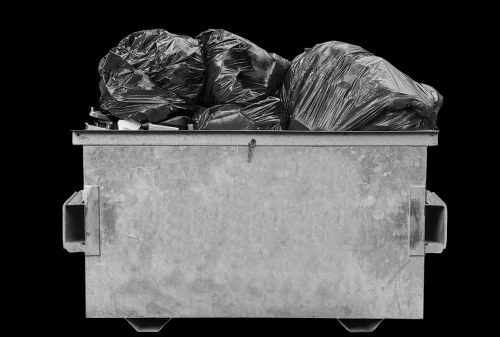 Operational Procedures: All operatives will follow written procedures for segregation, containment and transport of business waste, including hazardous and regulated streams. Procedures address daily checks, vehicle loading limits, spill response, decontamination and cleaning routines. A pre-shift vehicle and equipment inspection checklist must be completed and any defects reported. Drivers and loaders will apply safe manual handling techniques and use provided lifting equipment to reduce strain injuries.
Training and Competence — The company will deliver role-specific induction and refresher training covering waste types, safe handling, PPE use, emergency response and driving safety for commercial rubbish services. Competence will be assessed and recorded. Supervisors will be trained in risk assessment, incident investigation and monitoring to ensure ongoing compliance and to support a positive safety culture.
Personal Protective Equipment and Occupational Health
Appropriate PPE such as high-visibility clothing, gloves, boots and eye protection will be supplied and maintained. Health surveillance and access to occupational health advice will be available where activities present specific risks (for example, exposure to biological waste or repetitive handling). The company will promote good manual handling practice to prevent musculoskeletal injury and ensure operatives have safe rest and hydration arrangements during shifts.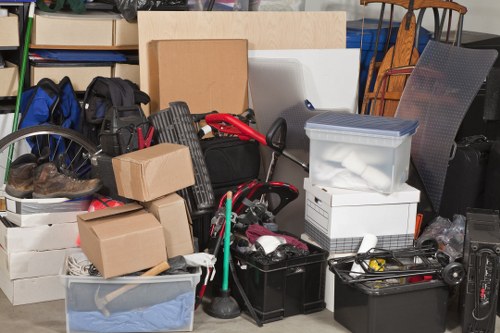 Vehicles, Plant and Site Safety — Vehicles used for commercial waste collection will be maintained to standards that ensure safe operation. Drivers will observe safe speeds, use seat belts and maintain good loading practices to prevent falls or spills. Site safety at customer premises will be reviewed before work begins: hazards such as uneven surfaces, confined spaces, low ceilings or obstructed access will be mitigated using safe systems or by refusing unsafe work until controls are in place.
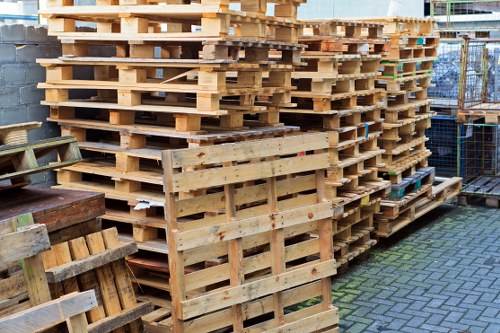 Emergency Preparedness and Incident Management — The organisation will maintain procedures for managing incidents, including spills, fires, injuries and exposures. All incidents and near misses will be reported, investigated and used as an opportunity to learn and improve controls. First aid provision, spill kits and emergency contact arrangements will be in place for each operating area. Regular emergency drills will be conducted to test preparedness.
Monitoring, Audit and Review
Performance will be monitored through routine inspections, driver and site reports, internal audits and corrective action tracking. Key performance indicators may include incident frequency, training completion rates and vehicle inspection compliance. Management will review this policy and associated procedures at least annually and after significant incidents or changes in operations to maintain relevance and effectiveness for commercial waste operations.Responsibility and Culture — Health and safety is integral to our business delivery model for commercial rubbish and waste services. Leadership will provide the resources to implement this policy, managers will apply it consistently, and employees will be empowered to stop unsafe work. A collaborative safety culture that encourages reporting and continuous improvement underpins our approach to protecting people, property and the environment.
Policy Implementation — This policy is endorsed by senior management and will be communicated to all personnel, contractors and business customers where appropriate. It forms part of contract documentation for commercial waste and refuse services and is supported by operational procedures, training records and risk assessments kept on file for regulatory and management review.
